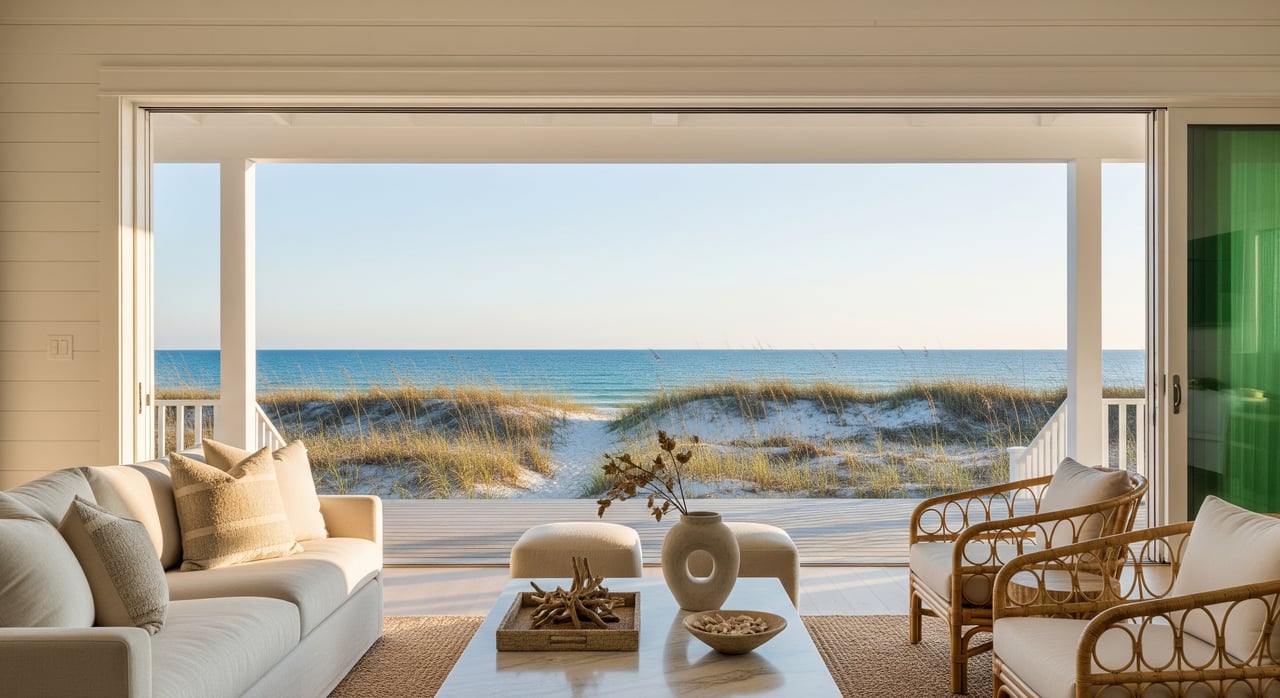
Salt, sun, and sand are why you love Dune Allen Beach, but they can be tough on a home you plan to sell or rent. If you want top dollar and faster offers, you need staging that looks coastal-chic and holds up to humidity, salt spray, and busy beach days. In this guide, you’ll learn how to showcase Gulf-facing views, choose materials that last, and prep for buyer questions about flood and storm readiness. Let’s dive in.
Why staging matters in Dune Allen
Dune Allen sits on the Emerald Coast, where warm, humid weather and a defined hurricane season shape how homes live and age. Buyers expect bright, airy rooms, seamless indoor–outdoor flow, and durable finishes that handle daily beach traffic. Vacation-rental investors also look for “turnkey” layouts and strong listing visuals that translate into bookings.
Professionally presented homes tend to sell faster and can command stronger offers. Industry research from the National Association of Realtors supports the value of well-executed staging, especially when photos and layouts highlight lifestyle.
Coastal-proof staging basics
Lead with the view and light
- Make the Gulf or dune line your focal point. Angle sofas and chairs toward windows and sliders.
- Keep window treatments simple. Use light-filtering shades or sheer panels to maximize natural light and sightlines.
- Clear visual clutter near doors to porches and balconies so the eye reads an easy indoor–outdoor flow.
Colors and texture that sell
- Start with a neutral base: soft whites, warm sands, and gentle taupes.
- Add subdued coastal accents in pale blues or greens. Avoid kitschy themes or heavy nautical props.
- Layer textures like slubby linen, rattan, and jute to create a relaxed, high-end coastal feel.
Materials that handle salt and sand
- Flooring: prioritize porcelain tile, luxury vinyl plank, or engineered hardwood with a moisture-tolerant finish.
- Upholstery: choose performance fabrics such as solution-dyed acrylics that resist fading and mildew.
- Metals: use marine-grade stainless or coated metals for outdoor seating and hardware.
- Rugs: pick low-pile or indoor–outdoor rugs that shake out easily and hide sand.
Room-by-room checklist
Entry and mudroom
- Bench plus hooks and cubbies for towels and beach bags.
- Waterproof boot tray and a sand-friendly doormat in a darker tone.
- A lidded basket for sandy shoes and quick-dry towels on display.
- Bright, welcoming light and a clear walkway into the main living space.
Living and great room
- Face seating toward water or dune views and remove any extra pieces that block flow.
- Add one statement piece of art with a coastal nod. Keep accessories minimal and cohesive.
- Use performance fabric on main upholstery and a neutral indoor–outdoor rug.
- Corral remotes, books, and throws to keep surfaces tidy for showings.
Kitchen and dining
- Clear counters. Stage a wood cutting board, a bowl of citrus, or a simple carafe and glass set.
- Highlight easy-clean surfaces. If finishes are older, use sleek small appliances and uncluttered styling to modernize the look.
- If there’s an island, set two place settings to suggest casual gathering.
- Show pantry or cabinet organization to prove storage works for beach gear and bulk items.
Bedrooms
- Keep bedding light and breathable. Layer a white duvet with one accent color or textured throw.
- Use matching lamps and neutral art to create a calm mood.
- Show off closet capacity with slim hangers and labeled bins where space is tight.
- In a primary suite, angle the bed to respect view lines and airflow from windows.
Bathrooms
- Spa-like feel: oversized white towels, a small plant, and minimal accessories.
- Ensure grout and caulk are clean and fresh. Replace tired shower curtains with clear glass if feasible.
- Demonstrate ventilation with a quiet fan or a discreet dehumidifier where needed.
Outdoor living
- Stage distinct zones: a conversation area, a dining nook, and a lounge spot if space allows.
- Use weather-rated seating with performance cushions and anchor with a simple indoor–outdoor rug.
- Keep pathways to dune crossovers or beach access clear and uncluttered.
- Choose native or low-maintenance planters. Avoid anything that might impact dune vegetation.
Rental-ready touches
- Show group-friendly seating and flexible sleeping, such as a styled daybed or sleeper sofa.
- Stage a tidy, labeled “house info” binder or tablet on a console to imply easy turnovers.
- Include lockable storage in a discreet closet to signal owner organization without drawing attention to personal items.
Show flood and storm readiness
Many Gulf-side and near-beach properties fall within FEMA flood zones, which shapes buyer expectations on insurance and design. You can reassure buyers with visible, practical cues.
- Display elevation-conscious features where applicable, like raised appliances or flood vents. Keep them clean and unobstructed.
- Keep easy-to-clean flooring consistent on the main level and note any water-resistant materials in listing remarks.
- If you have shutters or storm panels, store them neatly and label the hardware so buyers can see how quickly they deploy.
- Understand your flood zone and elevation data before showings. The FEMA Flood Map Service Center is the official resource for flood maps and elevation references.
- Be aware of the local storm calendar. The NOAA hurricane season guidance offers clear timing and preparedness information.
Photography and timing
Your photos should sell the Dune Allen lifestyle. Plan for coastal light and context.
- Shoot exteriors on calm, clear days and aim for golden hour to capture water color and sky.
- Photograph interiors late morning or early afternoon for soft, even light.
- Include at least one image that shows proximity to beach access or a dune crossover.
- Feature outdoor living first in your image order. Buyers often decide to book a showing based on those spaces.
- For seasonality and travel context, review insights from Visit South Walton.
Costs and ROI
Staging costs vary by scope and the need for outdoor-rated pieces. Partial staging is a lower investment, while full-home and deck staging can cost more due to weather-resistant furnishings and delivery logistics near the beach. Industry research from the National Association of Realtors indicates that well-staged homes commonly sell faster and can support stronger pricing, especially when photos highlight lifestyle and function.
Compliance and HOA notes
Dune Allen includes a mix of residential pockets and associations, and Walton County regulates coastal activity and beach access. Before adding exterior décor, temporary structures, or signage, confirm HOA guidelines and county rules. The Walton County official site is a good starting point for planning and permitting questions, while the Florida Department of Environmental Protection provides guidance on dune protection and coastal construction controls. Keep landscaping native where possible and avoid any staging that impacts dune vegetation or obstructs access.
Quick pre-show checklist
- Open shades and draperies to showcase views and bring in light.
- Turn on all lights. Replace any bulbs that flicker or dim.
- Sweep sand from entries and rinse mats. Shake out indoor–outdoor rugs.
- Tuck away personal toiletries and minimize countertop items.
- Wipe salt spray from railings and glass, especially on balconies.
- Stage a tidy mudroom drop zone for sandals, towels, and boards.
- Set out a simple, neutral tray with chilled water or lemonade to echo beach hospitality.
Maintenance that reassures buyers
Pressure wash porches and inspect deck fasteners for corrosion.
Replace HVAC filters and run dehumidifiers as needed to reduce humidity.
Refresh paint in high-traffic zones with washable finishes like satin or eggshell.
Tighten door hardware and clean stainless to remove salt residue.
Smart listing remarks to include
Use your listing copy to underline the staging story and answer common questions upfront.
- Durable finishes throughout: tile or LVP flooring and performance upholstery.
- Indoor–outdoor flow with low-profile window treatments and Gulf-facing seating.
- Practical beach entry: bench, hooks, washable rugs, and storage.
- Storm-ready details: organized shutter storage and easy deployment.
- For STR buyers: flexible sleeping options and group-friendly living spaces.
Ready to stage and list with a local expert who understands Dune Allen’s buyers and seasonality? Reach out to Emerald Dunes Realty for concierge-level market prep and polished digital presentation.
FAQs
How do I handle humidity and mildew when staging a Dune Allen home?
- Use performance fabrics, run dehumidifiers where needed, choose washable paint finishes, and keep ventilation obvious with working fans and quiet bath exhausts.
What should I know about flood zones and insurance in Dune Allen?
- Many coastal properties fall in FEMA flood zones. Review your elevation and zone at the FEMA Flood Map Service Center and highlight any flood-conscious features during showings.
How should I stage outdoor furniture for storm season?
- Select weather-rated pieces that are easy to secure or store quickly. Keep labeled straps or storage visible so buyers understand the plan without alarm.
Which colors and décor appeal to 30A buyers without clichés?
- Use a neutral base with soft sand, blue, or green accents, add texture through linen and rattan, and avoid themed props so the home feels elevated and timeless.
How do I stage a home that also operates as a vacation rental?
- Emphasize group-friendly seating, flexible sleeping options, durable finishes, and a tidy “house info” station that signals easy turnovers and guest-ready organization.