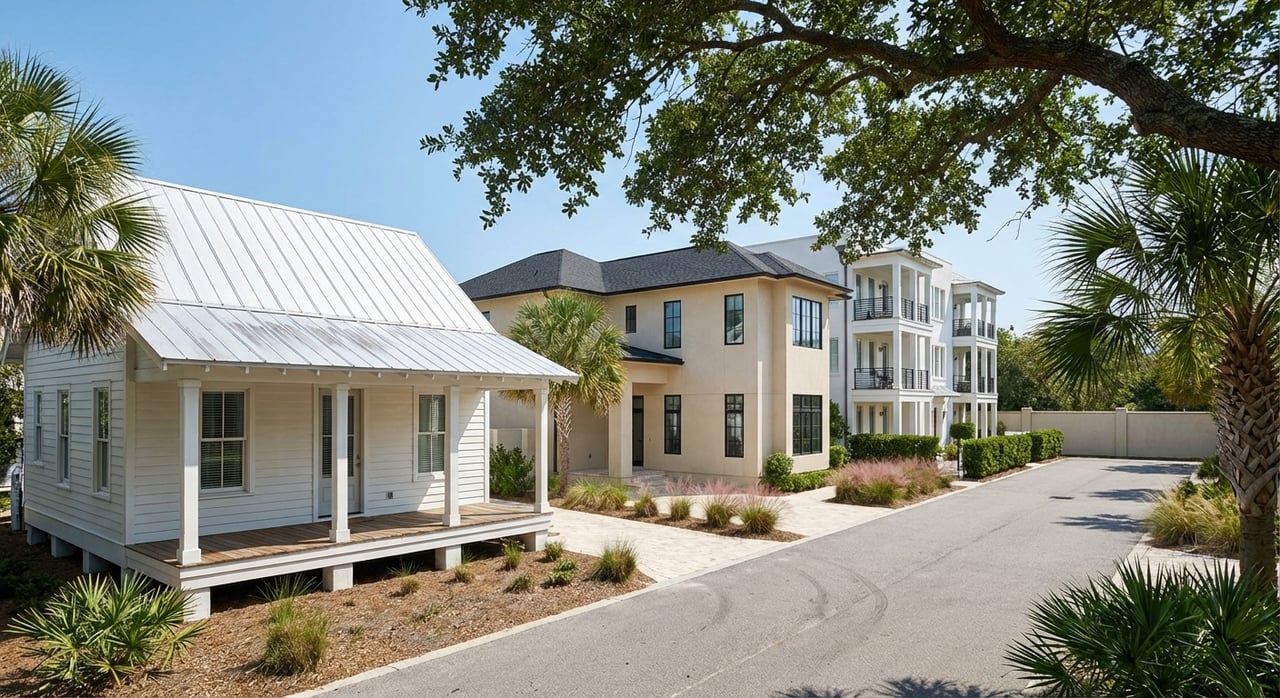
You know you want the Seagrove lifestyle, but which home style actually fits the way you plan to live on 30A? Between cottage charm, sleek modern builds, and low‑maintenance condos, the choices can feel overwhelming. This guide breaks down the layouts, maintenance needs, and coastal rules that shape homes here so you can compare with confidence. You will also get a practical checklist to use on any Seagrove listing. Let’s dive in.
Seagrove in a snapshot
Seagrove Beach is a two‑mile coastal community on Scenic Highway 30A in Walton County, set between Seaside and WaterSound. It offers public beach access, a walkable mix of shops and dining, and rare dune lakes like Deer Lake and Eastern Lake that add a nature‑focused vibe. For a quick orientation, see this concise Seagrove Beach overview.
Architecturally, Seagrove is varied. You will find mid‑century cottages near newer multi‑story coastal homes and pockets of townhomes and condos. Design rules, HOA guidelines, and lot types can change from one block to the next, so parcel‑level due diligence is essential.
Seagrove home styles at a glance
Classic beach cottages
Typical traits
- One to one‑and‑a‑half stories with modest footprints, simple gable roofs, and wood clapboard or older concrete block exteriors.
- Generous front or screened porches that extend living outdoors and create shaded hangout space.
Layout and lifestyle
- Open main living and kitchen, 2 to 3 bedrooms, often a bunk or guest room.
- Short walks to the sand and tight, community‑oriented lots that favor porch time and easy beach runs.
Foundation and insurance notes
- Older cottages may sit on perimeter walls or enclosed crawl spaces where allowed by flood zone and elevation.
- Gulf‑front and wave‑exposed parcels typically require open, elevated pile or pier foundations in V zones per FEMA coastal guidance. Always confirm the mapped FEMA zone and Base Flood Elevation before you assume foundation type.
Maintenance considerations
- Wood siding and exposed trim in salt air mean more frequent painting, sealing, and fastener checks.
- Practical upgrades like impact windows, stainless fasteners, and elevated utilities can reduce long‑term risk, which aligns with FEMA best practices.
Who this fits
- You want cottage character, walkability, and a smaller footprint. You are comfortable with hands‑on exterior upkeep or a reliable caretaker plan.
Contemporary coastal builds
Typical traits
- Multi‑level homes with large window walls, upper‑level Gulf decks or rooftops, and engineered exterior materials.
- Metal roofs, impact‑rated windows and doors, and composite decking are common.
Layout and lifestyle
- Open plans sized for gatherings, multiple guest suites, and sometimes elevators.
- Outdoor kitchens and terraces focus on views rather than large yards.
Foundation and regulatory drivers
- On Gulf parcels in V zones, modern builds are typically elevated on piles and must meet NFIP and Florida Building Code wind and flood standards. Expect elevation certificates and floodplain review during Walton County permitting. For the technical framework, review FEMA’s coastal building resources.
Maintenance considerations
- Elevated mechanicals and impact glazing help reduce flood exposure, but large glass areas and extensive decks need regular cleaning and service.
- Salt‑air corrosion control, including 316 stainless fasteners and high‑performance coatings, extends service life per FEMA guidance.
Who this fits
- You want modern coastal comfort, strong view potential, and a design built with mitigation in mind, and you are prepared for higher build, insurance, and maintenance costs.
Townhomes and condos
Typical traits
- Low‑ to mid‑rise condos and attached townhomes where HOAs handle exterior maintenance and common areas.
- One Seagrove Place is a long‑standing Gulf‑front condominium and the only high‑rise style building along 30A, offering elevated views from higher floors.
Layout and lifestyle
- Individual units with smaller private footprints, balanced by shared amenities like pools and fitness rooms.
- Townhomes offer a bit more private outdoor space while still enjoying HOA upkeep.
Maintenance and insurance
- HOA or master policies typically cover common elements. Unit owners insure interior finishes and should verify how flood coverage is handled.
- Because flood premiums are now more property‑specific under Risk Rating 2.0, get quotes early. See the NFIP’s Risk Rating 2.0 guidance.
Who this fits
- You want low day‑to‑day upkeep, clear rules, and amenity access, and you are comfortable with association fees and governance.
Key coastal rules that shape homes
Flood zones and elevation
- FEMA coastal zones determine acceptable foundations and required elevations. In V zones, open pile or pier systems keep surge moving under the home, and the lowest structural member must sit at or above the Base Flood Elevation. Get familiar with FEMA’s coastal building science resources before you evaluate a property’s risk and design.
Florida’s CCCL program
- Parcels seaward of the Coastal Construction Control Line face stricter review and may have limited options for new work or major changes. Start with the Florida DEP’s CCCL overview and emergency permitting details to understand the process for Gulf‑front sites: Florida DEP CCCL program.
Walton County permitting
- Seagrove sits in unincorporated Walton County, so county planning and floodplain review are your baseline. Many neighborhoods also add HOA or Architectural Review Board layers. For questions on local permits and review steps, see Walton County Building Permit Review.
Insurance and Risk Rating 2.0
- NFIP premium calculations now account for distance to water, elevation, foundation, and replacement cost, so neighbors can have very different quotes. Ask for address‑specific flood quotes early using the NFIP’s Risk Rating 2.0 guidance.
Buyer due diligence checklist
Use this quick list on any Seagrove property before you commit:
- Confirm the FEMA flood zone, panel, and Base Flood Elevation. Request an elevation certificate or budget for a new survey if one is missing. Start with FEMA’s coastal building science.
- Ask if the lot or improvements are seaward of the Coastal Construction Control Line and whether prior CCCL permits exist. Review the Florida DEP CCCL program.
- Verify foundation type and whether mechanicals and utilities sit above the Design Flood Elevation. For condos, clarify what the HOA master policy covers versus unit responsibility.
- Review HOA or ARB rules, rental policies, guest parking, and regular assessments. These can be decisive when choosing among cottages, custom builds, or condos.
- Request sample maintenance budgets. Compare paint and trim cycles, deck resealing, and twice‑a‑year HVAC service across the styles. Salt environments need proactive care per FEMA guidance.
- For Gulf‑front property, ask for any recorded shoreline or CCCL permits and available erosion or monitoring data. The Florida DEP maintains coastal monitoring and permits.
- Contact Walton County for parcel‑specific permit and floodplain questions at the Building Permit Review page.
Local examples you will see
- Classic cottage streets: Pockets in Old Seagrove and Gulf Shore Manor often show renovated cottages next to newer infill, a good snapshot of the area’s evolution.
- Contemporary coastal homes: East Seagrove and streets around San Juan feature custom builds with rooftop decks, multiple guest suites, and elevated living.
- Condo lifestyle: At One Seagrove Place, higher floors capture the long Gulf view, a strong example of amenity‑forward, lower‑maintenance living.
Use a neighborhood map and a few visuals as you tour. A porch scene from a cottage compared with a rooftop terrace on a modern build often makes the tradeoffs clear.
Quick glossary
- BFE: Base Flood Elevation, the computed water surface elevation that floodplain rules use to set minimum building heights.
- V zone: High‑energy coastal flood zone that requires open, elevated foundations designed for wave action.
- CCCL: Florida’s Coastal Construction Control Line, which triggers stricter state review for work near the beach and dunes.
- Elevation certificate: An official document that verifies a structure’s elevation relative to the BFE.
- ARB or CCRs: Architectural Review Board and Covenants, Conditions, and Restrictions, which guide design and use in many neighborhoods.
- HOA master policy vs. unit policy: The association’s insurance for common elements versus an owner’s policy for a condo or townhome interior.
Find your fit
- Choose a cottage if you value charm, walkable blocks, and cozy gathering spaces. Plan for exterior upkeep and smart coastal upgrades.
- Choose a contemporary build if you want views, modern systems, and a design that factors in coastal forces. Expect higher insurance and maintenance.
- Choose a condo or townhome if low personal upkeep and shared amenities win for your lifestyle. Review HOA rules, fees, and insurance line by line.
Next steps and local help
Every Seagrove parcel tells a different story, from flood elevation to HOA design rules. If you want a guided shortlist that matches your lifestyle and budget, we are here to help. Start your visit with a few favorites, then refine as we confirm elevation, CCCL status, and association details.
Ready to compare live listings and tour? Partner with Emerald Dunes Realty for boutique, owner‑led service and local expertise. Start Your Coastal Home Search.
FAQs
What are the main home styles in Seagrove?
- Classic beach cottages, contemporary multi‑story coastal homes, and townhomes or condos are the most common options.
How do FEMA flood zones affect Seagrove homes?
- Flood zones set minimum elevations and foundation types, and V zones typically require open, elevated pile or pier systems per FEMA’s coastal guidance.
What is Florida’s CCCL and why does it matter for Gulf‑front lots?
- The CCCL adds state review and limits to work seaward of the line to protect dunes and beaches, so it can change what you are allowed to build or renovate.
How does Risk Rating 2.0 change flood insurance pricing?
- Premiums now reflect property‑specific factors like distance to water, foundation, and elevation, so two nearby homes can have very different quotes.
Do condos in Seagrove include flood coverage in HOA fees?
- Sometimes, but not always, so confirm what the master policy covers and whether unit owners must carry separate flood insurance.
Where do I start with permits in Seagrove?
- Begin with Walton County’s Building Permit Review, then layer in HOA or ARB requirements and check the CCCL status if you are near the Gulf.